
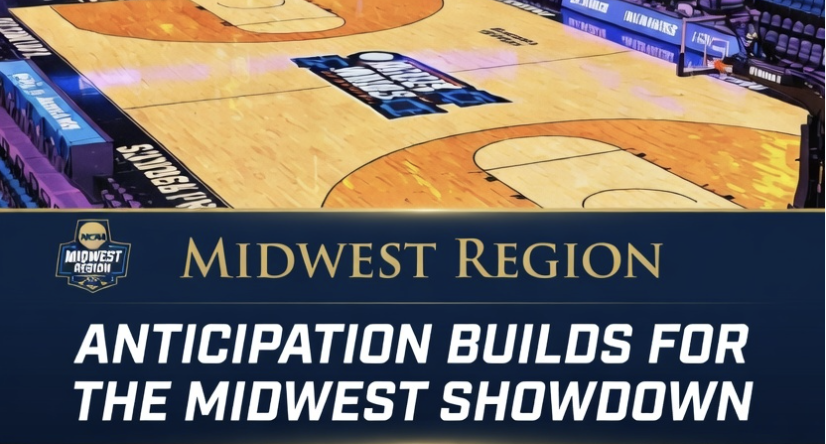

The spotlight on the March Madness Midwest region intensifies as the tournament begins, with Michigan positioned at the center of the conversation. Expectations are high, but history suggests stability rarely lasts in this part of the bracket. What appears clear on paper often unravels quickly once games tip off.
Michigan enters the NCAA Tournament with one of the most complete profiles in the field. The Wolverines rely on interior dominance and frontcourt depth that consistently creates mismatches. Their ability to control the paint gives them a structural advantage, especially against teams that lack comparable size. Combined with a favorable draw, Michigan has a legitimate pathway to the Final Four and carries some of the strongest title expectations in the region.
Still, the Midwest region presents far more resistance than a top-heavy outlook suggests. Iowa State has emerged as a serious threat, driven by perimeter shooting and growing confidence. The Cyclones’ offense can shift momentum rapidly, particularly when Milan Momcilovic finds consistency from beyond the arc. In a tournament setting where runs define outcomes, that shooting profile makes Iowa State dangerous in any matchup.
Virginia stands out as a potential disruptor among the top seeds. The Cavaliers bring a defensive identity that can dictate tempo and limit scoring opportunities. Ugonna Onyenso anchors the interior, forcing opponents into difficult possessions and slowing games into half-court battles. That style often proves effective in March, where execution and patience become critical late in games.
The volatility of the March Madness Midwest region becomes even more apparent beyond the top seeds. Santa Clara’s perimeter-heavy offense introduces immediate upset potential, particularly against a Kentucky squad that has struggled to maintain consistency. Akron enters the tournament with momentum, creating pressure on a Texas Tech team dealing with rotation concerns and limited depth.
Miami of Ohio adds another layer of intrigue. If the RedHawks advance out of the First Four, their disciplined structure and near-flawless regular season performance suggest they are capable of competing beyond expectations. That kind of profile often produces early-round surprises in March.
Coaching trends and recent tournament history further complicate the bracket. Tennessee has faced recurring challenges in translating regular-season success into deep tournament runs, while Alabama enters with uncertainty following late developments affecting its roster. Both situations create openings for unexpected outcomes.
As the tournament unfolds, attention will remain fixed on Michigan and whether it can convert its advantages into sustained success. The Wolverines have the roster balance, physical presence, and bracket positioning to control the region. However, March Madness consistently rewards adaptability over projections.
The Midwest region is structured for volatility. A single shooting surge or defensive sequence can redefine the bracket in an instant. Michigan may set the standard entering the tournament, but the margin for error remains thin, and the narrative is likely to shift quickly as results come in.
Enjoy the content? Stay locked in with OutOfSightSports for daily highlights, real talk, and bold takes that keep the game alive. 🗣️
Catch more action and insight on our YouTube channel below ⬇️ 🚀