
Tag: Chase Burns

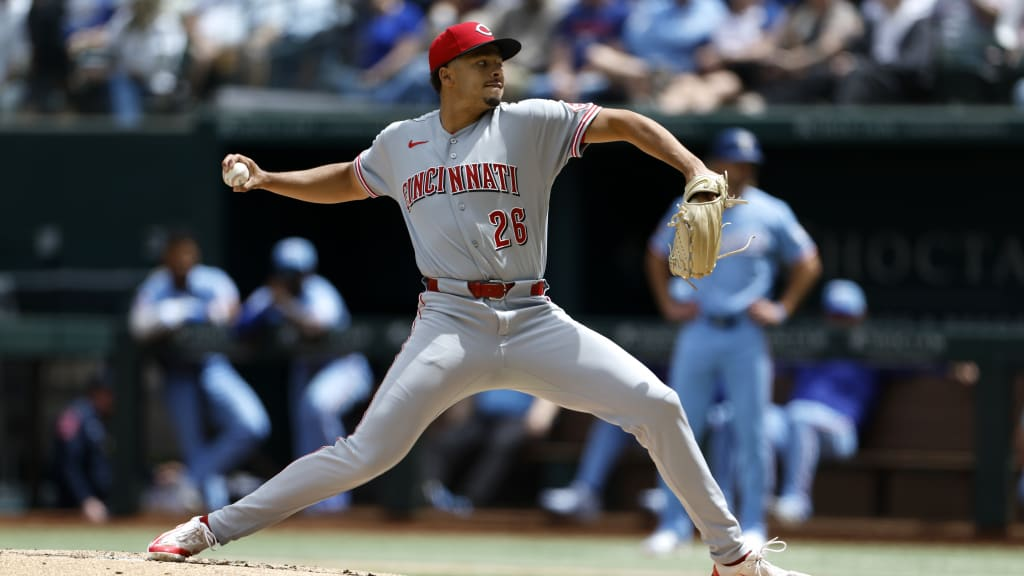
Reds rookie pitcher Chase Burns shines; Elly De La Cruz delivers vs. Rangers to complete the sweep

Chase Burns 4/5/2026

Chase Burns hadn’t worked into the seventh inning at any point in his young career with Cincinnati prior to Sunday. After six dominant, scoreless frames against Texas, manager Terry Francona allowed his 23-year-old right-hander to return to the mound, despite the bullpen running thin.

The decision nearly backfired.

Burns surrendered a game-tying solo homer to Joc Pederson to open the seventh, a fly ball that carried with help from the wind at Globe Life Field. Still, Cincinnati regrouped and held on for a 2-1 win, completing a three-game sweep over Texas.

The difference came in the eighth inning, when Elly De La Cruz lined an RBI single that brought home Matt McLain from second base, restoring the lead.

Burns’ final line remained strong despite the late damage. He allowed just one earned run on five hits across six-plus innings, striking out nine with one walk. Through his first two outings, he owns a 0.82 ERA, building on a five-inning, scoreless effort earlier in the week that earned him his first big league win.

Cincinnati initially grabbed a 1-0 lead in the fourth inning behind an RBI single from Eugenio SuĂĄrez, which plated De La Cruz. Burns protected that advantage deep into the game, even escaping a sixth-inning threat by striking out Jake Burger with a runner in scoring position.

With key late-inning arms—including Graham Ashcraft, Tony Santillan, and Emilio Pagán—unavailable after heavy usage, the Reds needed length from Burns. He reached 80 pitches through six innings before returning for the seventh, where Pederson’s homer evened the score. Statcast measured the wind-assisted drive as gaining an additional 25 feet with the roof open.

After Evan Carter followed with an infield hit on Burns’ 87th pitch, Francona turned to the bullpen. Pierce Johnson entered but issued a walk and uncorked a wild pitch, bringing further pressure. Sam Moll stepped in with two outs and closed the inning without additional damage.

Connor Phillips handled the eighth, navigating traffic that included a double and a walk, preserving the narrow lead.

At 6-3 through nine games, Cincinnati continues to lean on tight, low-margin victories, with every win so far decided by two runs or fewer.

5 Spring Training Moments That Screamed Superstar Potential

Spring Training is often about rhythm and repetition. But sometimes, it’s about projection.

A handful of young players delivered measurable flashes this spring that hint at something bigger. Exit velocity. Whiff rates. Induced vertical break. These are the data points that forecast future value.

Here are five moments that stood out.

1. Jac Caglianone — 120.2 mph Double

Breaking 120 mph as a hitter is rare territory.

Only seven players in the entire Statcast era have reached that threshold in a Major League game: Giancarlo Stanton, Oneil Cruz, Aaron Judge, Shohei Ohtani, Vladimir Guerrero Jr., Ronald Acuña Jr. and Gary Sånchez.

Now Caglianone has joined that club — even if it came in Spring Training.

The Kansas City Royals slugger launched a 120.2 mph double against Arizona, adding a 116.5 mph double and a 115.2 mph, 460-foot home run to his spring résumé.

Elite exit velocity translates. Power like that plays in any ballpark.


2. Konnor Griffin — 111.2 mph, 440-Foot Home Run

MLB’s No. 1 overall prospect looks the part.

The Pittsburgh Pirates phenom crushed a 111.2 mph, 440-foot home run over the imitation Green Monster at JetBlue Park.

He’s just 19 years old.

Seven of his first 12 batted balls this spring cleared 100 mph. Three left the yard.

The combination of bat speed, leverage and consistent hard contact suggests Griffin’s timeline may move quickly.


3. Chase Burns — 54% Whiff Rate

Burns’ 4.57 ERA as a rookie masked how dominant his underlying metrics were.

The Cincinnati Reds right-hander posted a 36% strikeout rate and 32% swing-and-miss rate last season. This spring, he has taken it up another level.

Across his first two outings, Burns has generated whiffs on over half the swings against him — the second-highest rate among pitchers with at least 25 swings faced.

His fastball is averaging 97.4 mph with a 41% whiff rate. His 90.2 mph slider has induced whiffs 75% of the time.

Those are frontline starter traits.


4. Charlie Condon — 115.3 mph Home Run

Power travels.

The Colorado Rockies prospect launched the hardest home run of the spring at 115.3 mph.

That kind of raw bat speed separates hitters at any level. At just 22 years old and ranked inside MLB’s Top 100 prospects entering 2026, Condon’s ceiling continues to rise.

When young hitters start producing triple-digit exit velocities with consistency, organizations take notice.


5. Ryan Lambert — 98 mph Fastball With 22 Inches of Induced Rise

Velocity is one thing. Shape is another.

The New York Mets arm debuted a 98 mph fastball with a 2,562 rpm spin rate and 22 inches of induced vertical break.

High spin plus high induced vertical break creates “ride” — the illusion of rising through the zone. That is how pitchers miss bats upstairs.

Lambert’s heater currently ranks among the best in spring camp in terms of induced rise among pitchers with at least 10 fastballs thrown.

An upper-90s fastball with that kind of shape plays immediately.


Why These Moments Matter

Spring Training doesn’t crown stars.

But measurable traits do project future value.

Caglianone’s 120 mph exit velocity. Griffin’s repeated triple-digit contact. Burns’ elite swing-and-miss profile. Condon’s raw power. Lambert’s rising fastball.

These are not random flashes.

They are indicators.