

May 14th, 2025
2025 NBA Mock Draft 1.0: Cooper Flagg Headlines a Transformative Class
1. Dallas Mavericks: Cooper Flagg (Duke, PF)
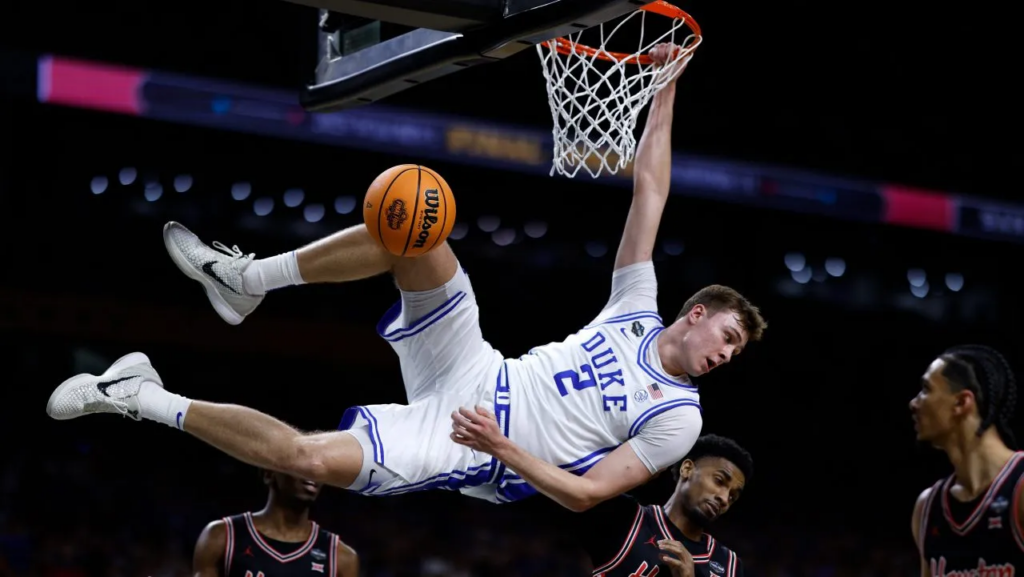
Player Profile and Strengths:
Cooper Flagg is as close to a generational prospect as we’ve seen since Victor Wembanyama. At 6’9” and 205 pounds, Flagg is the definition of a modern NBA forward — long, versatile, explosive, and incredibly skilled. He’s only 18 years old, but already looks like he could anchor a defense and initiate offense. His combination of size, athleticism, and basketball IQ makes him the clear No. 1 overall pick.
Offensively, Flagg can score from anywhere. He’s comfortable shooting off the dribble, knocking down threes off the catch, and finishing through contact. What’s even more impressive is his passing vision; he reads defenses like a point guard, often whipping cross-court passes or executing slick give-and-gos. On defense, he’s already elite. He moves like a wing but defends like a center, capable of switching across five positions, protecting the rim, and playing the passing lanes with ferocity.
Pro Comparison: A hybrid of Jalen Johnson’s playmaking and Kevin Garnett’s defensive instincts.
Fit with the Mavericks:
With Luka Dončić’s blockbuster departure still fresh, Dallas finds itself searching for a new franchise cornerstone. Cooper Flagg fits that bill. Imagine pairing his defensive instincts and high-IQ play with the scoring of Kyrie Irving (once he returns from injury) and the interior presence of Dereck Lively II and Anthony Davis. That frontcourt trio would be nightmarish for opposing offenses.
Flagg would thrive playing off Kyrie’s gravity, cutting to open space, or popping out for threes. Defensively, he gives the Mavericks a legitimate anchor who can mask a lot of their past issues. While Dallas will need to surround him with shooters to maximize spacing, Flagg is a plug-and-play star from day one, and his ceiling is flat-out scary.
This pick isn’t just about talent — it’s about direction. With Flagg, Dallas resets its identity and instantly re-enters the conversation as a future contender.
2. San Antonio Spurs: Dylan Harper (Rutgers, PG/SG)

Player Profile and Strengths:
Dylan Harper is a 6’6”, 215-pound combo guard with one of the most complete guard skill sets in the draft. He has a powerful frame, a tight handle, and an elite ability to attack downhill. Harper excels in the pick-and-roll, where his mix of strength, patience, and change-of-pace dribbling makes him a nightmare for defenders. He’s not just a slasher, either — he’s got a smooth pull-up game and shoots nearly 40% on catch-and-shoot threes.
His versatility is his calling card. Harper can run the offense, play off the ball, or defend either guard spot. He has the strength to post smaller guards and the vision to hit cutters and shooters in stride. Scouts have raved about his leadership, confidence, and ability to rise in big moments.
Pro Comparison: A blend of Cade Cunningham’s size/playmaking and Jalen Brunson’s scoring efficiency.
Fit with the Spurs:
The San Antonio Spurs are quietly building a monster. With Victor Wembanyama already establishing himself as a franchise-altering big, they now add Harper — a two-way guard who can initiate offense and ease the burden on Wemby and Stephon Castle. Harper gives them another ball-handler with a much-needed scoring punch, especially in late-game situations.
Yes, there are questions. San Antonio already made a move for De’Aaron Fox. Do they need another guard? The answer is yes — Harper’s versatility allows him to co-exist with Fox, Castle, or whoever is handling the rock. He can function as the lead guy or play off a star, and with Wemby commanding so much attention, Harper should have plenty of room to operate.
This pick could mark the beginning of a new Spurs dynasty. The talent is that serious.
3. Philadelphia 76ers: VJ Edgecombe (Baylor, SG/SF)

Player Profile and Strengths:
VJ Edgecombe is pure dynamite. At 6’5” and 180 pounds, he’s one of the most electric athletes in this draft class. His speed, vertical explosion, and lateral quickness jump off the screen. But don’t let the flash fool you — Edgecombe is a hard-nosed competitor who brings intensity on both ends.
He’s a menace in transition, thrives in isolation, and is one of the best slashers in the class. His improved three-point shooting (hovering near 38%) has silenced early concerns about his jumper, and his defensive potential is sky-high thanks to his foot speed and anticipation. He’s a fierce on-ball defender and a threat in passing lanes, capable of sparking fast breaks with his energy alone.
Pro Comparisons: Andrew Wiggins meets Victor Oladipo.
Fit with the 76ers:
The Sixers didn’t land the top pick, but they snagged an elite talent in Edgecombe. He’s a perfect fit whether they choose to remain competitive around Tyrese Maxey and Joel Embiid or pivot toward a younger core. Edgecombe doesn’t need the ball to make an impact — he runs the floor, cuts hard, and defends with intensity.
If Philly keeps its current build, Edgecombe instantly boosts the defense and adds offensive spark off the bench or in the starting lineup. If they reset around Maxey and rookie Jared McCain, Edgecombe fits that too. He’s a culture setter — a high-character, high-motor guy who thrives in competitive environments.
With the Sixers teetering between contention and rebuild, Edgecombe offers the kind of versatility and upside that gives them maximum flexibility.
4. Charlotte Hornets: Ace Bailey (Rutgers, SF)

Player Profile and Strengths:
Ace Bailey is perhaps the most intriguing swing in the top five. At 6’10” and 200 pounds, Bailey has the frame of a forward with the skills of a guard. He’s a high-level shotmaker with deep range, capable of creating his own shot against any defender. His offensive game is silky — smooth step-backs, tough fades, and quick-trigger pull-ups are all in his bag.
But with that flash comes some volatility. His shot selection has been shaky, and his tunnel vision as a scorer raises questions. Still, at just 18, the upside is tantalizing. He’s shown glimpses of playmaking, and his tools suggest he can develop into a three-level scorer with All-Star potential. If the defense catches up to his offense, he could be a franchise player.
Pro Comparisons: Brandon Miller’s shotmaking meets Michael Porter Jr.’s archetype.
Fit with the Hornets:
Charlotte is in no rush. With LaMelo Ball and Brandon Miller already in place, they can afford to swing for the fences — and Bailey is the home run swing. He fits the mold of long, rangy scorers that the modern NBA covets, and his shot creation would take pressure off LaMelo to do everything.
There may be growing pains, especially on defense and in decision-making, but Charlotte is playing the long game. If Bailey reaches his ceiling, this pick could go down as a franchise-defining moment.
5. Utah Jazz: Jeremiah Fears (Oklahoma, PG)

Player Profile and Strengths:
Jeremiah Fears is one of the smoothest guards in this class. At 6’4” and 182 pounds, he combines quickness, vision, and scoring instincts. Over the final stretch at Oklahoma, he averaged over 22 points and nearly five assists per game, showcasing his ability to take over offensively.
He’s a threat from mid-range and beyond the arc, and he’s a shifty ball-handler who thrives in tight spaces. Fears’ poise in pick-and-roll situations and his ability to make tough shots under pressure have drawn rave reviews. He’s not a finished product — his three-point consistency, off-ball movement, and turnover issues need polishing — but the talent is undeniable.
Pro Comparison: Dejounte Murray but a better ability to create open shots off the dribble.
Fit with the Jazz:
Utah needs a lead guard, and Fears checks the box. While Keyonte George is still in development, Fears brings more polish as a passer and scorer. The Jazz can afford to let him grow into a lead role, especially as they continue to reshape the roster around young talent like Walker Kessler and Taylor Hendricks.
His confidence and creativity give Utah a spark they’ve lacked in the backcourt. If he tightens his game and embraces the grind, Fears could be the point guard of the future for a rising Jazz squad.
6. Washington Wizards: Tre Johnson (Texas, SG)

Player Profile and Strengths:
Tre Johnson is a scoring machine. At 6’6″ and 190 lbs, he blends a natural scoring touch with NBA-ready mechanics. Johnson’s game screams offensive weapon: from his confident three-point stroke to his polished pull-up jumper, he’s one of the best shot-makers in the 2025 class. Averaging 19.9 points per game at Texas, he proved he can be a go-to option.
What sets him apart is how effortlessly he scores in a variety of ways — catch-and-shoot, off the bounce, in transition, and with contact. He’s fearless in the clutch and can create separation with quick dribble moves and a strong first step. His competitiveness and sharp instincts make him a tough cover on any night.
There are still questions about his explosiveness at the rim and ability to consistently create for teammates. His assist numbers weren’t eye-popping, and he often relied more on tough shot-making than system offense.
Fit with the Wizards:
Washington is in desperate need of offensive juice, and Johnson brings just that. With recent draft picks leaning toward versatile defenders, Johnson could slot in as the Wizards’ top perimeter scorer. He would balance the lineup alongside defensive-minded players like Bilal Coulibaly and Deni Avdija, providing spacing and a bailout scorer when the shot clock winds down.
The Wizards don’t have a clear face of the franchise at the moment, and while Johnson might not become a superstar right away, he has the potential to evolve into a 20+ PPG scorer. In a rebuilding environment where he’ll have a green light, he could put up impressive rookie numbers and develop into a foundational offensive piece.
7. New Orleans Pelicans: Khaman Maluach (Duke, C)

Player Profile and Strengths:
Khaman Maluach is one of the most intriguing bigs in the draft. Standing 7’2” and weighing 250 pounds, his sheer size makes him a natural shot-blocker and rim protector. But it’s his mobility and flashes of offensive versatility that have NBA scouts buzzing.
At Duke, Maluach was often overshadowed by bigger names, but the talent is there. He has soft hands, good footwork, and an emerging mid-range game. Pre-Duke tape showed a prospect comfortable stepping out to shoot and putting the ball on the floor in face-up situations. He’s not just a vertical threat — there’s potential for him to stretch the floor and create offense in spurts.
His defensive timing is sharp, and his rebounding motor is nonstop. What he lacks in polish, he makes up for in raw tools and willingness to compete. He’s still learning to stay out of foul trouble and polish his post game, but the ceiling is massive.
Fit with the Pelicans:
New Orleans got more than they expected from Yves Missi, but Maluach raises the ceiling. He could slot in as a rim protector and lob threat alongside Zion Williamson and Brandon Ingram, giving the Pelicans a new interior presence with long-term upside.
Long-term, Maluach could be the starting center who complements Zion’s scoring and Ingram’s perimeter game. If his shooting touch continues to develop, he may even give the Pels a new dimension as a floor-spacing big.
And with rumors swirling about a possible Kevin Durant trade, having a cost-controlled, high-upside center like Maluach becomes even more valuable for roster flexibility.
8. Brooklyn Nets: Derik Queen (Maryland, C)

Player Profile and Strengths:
Derik Queen is not your typical center. At 6’10” and 246 lbs, he’s a throwback big with a modern twist. His skill level on the block is unmatched in this class — elite footwork, soft touch, and the ability to score over either shoulder. But what makes Queen truly special is his passing. He sees the floor like a guard, often initiating offense from the elbow or post.
In Maryland’s NCAA run, Queen showed he could stretch the floor and rise to the moment — including a 27-point gem against Florida. He’s not just a scorer; he facilitates offense, sets strong screens, and makes smart reads. However, he’s not the most explosive athlete, and that raises concerns defensively. He struggles against quicker bigs and doesn’t block many shots.
Pro Comparison: Alperen Şengün with better post scoring.
Fit with the Nets:
Brooklyn is essentially starting from scratch, and Queen gives them a foundational offensive hub. With Ben Simmons’ future uncertain and no dominant offensive force on the roster, Queen could be the face of a new era in Brooklyn — one built on ball movement, creativity, and skill.
The Nets can live with Queen’s defensive limitations if they build the right structure around him. With enough versatile defenders on the wings, his elite offense makes him a cornerstone. Think of how Denver built around Jokic early — Queen could be Brooklyn’s version with the right pieces.
9. Toronto Raptors: Noa Essengue (Ratiopharm Ulm, PF)

Player Profile and Strengths:
Noa Essengue might be the most Raptors-esque pick in the draft. At 6’10” and 198 pounds, the French forward has a tantalizing blend of size, length, and mobility. He’s a switchable defender who thrives in transition and is becoming a more confident shooter.
Essengue’s scoring started as mostly rim runs and cuts, but lately he’s showing the ability to create his own offense. His improved ball-handling and willingness to take rhythm threes have raised his ceiling significantly. He’s an energy guy who gets second-chance points, defends multiple positions, and doesn’t need plays called for him to be effective.
Still raw, Essengue needs to refine his jumper and decision-making in the half-court. But the upside as a two-way forward is undeniable.
Pro Comparison: Jerami Grant lite with upside.
Fit with the Raptors:
Toronto has a type — long, athletic forwards with defensive upside and raw offensive tools. Essengue fits right in with Scottie Barnes and Gradey Dick, giving them another lengthy wing to develop. While he may not start immediately, he could thrive in Toronto’s system that emphasizes switchability and spacing.
If the Raptors are rebuilding, Essengue is a smart long-term investment. His motor and tools suggest he could be a valuable rotation player with star upside if the shooting becomes consistent.
10. Houston Rockets: Kon Knueppel (Duke, SF)
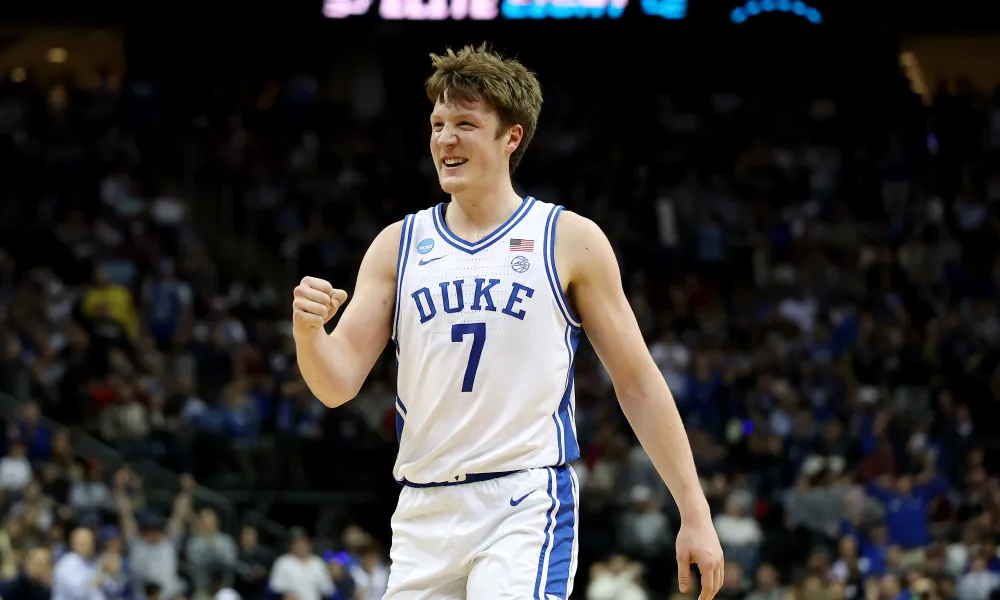
Player Profile and Strengths:
Kon Knueppel might be the most NBA-ready shooter in the draft. At 6’6” and 217 pounds, he boasts a compact, repeatable shooting motion and deep range. He’s not just a specialist — Knueppel can put the ball on the floor, make smart reads in pick-and-rolls, and finish with craft around the rim.
His high basketball IQ, decision-making, and feel for the game make him a coach’s dream. He doesn’t wow you with athleticism, but he makes the right plays consistently. Defensively, he’s competent if not flashy — smart in rotations but susceptible to quicker wings.
Pro Comparisons: Kevin Huerter with better feel, or a less athletic Saddiq Bey.
Fit with the Rockets:
Houston already has a wealth of young talent, but they still need shooting. Knueppel gives them that in spades. If they hold on to this pick (amidst trade rumors involving stars), Knueppel could be a valuable rotational piece who spaces the floor for Jalen Green, Amen Thompson, and Alperen Şengün.
He won’t be a primary option, but in a lineup full of athletes and creators, his skill set brings balance and spacing. If his defense holds up, he could carve out a long NBA career.
11. Portland Trail Blazers: Kasparas Jakucionis (Illinois, PG/SG)
Player Profile and Strengths:
Kasparas Jakucionis is a 6’6″, 200-pound combo guard out of Lithuania with serious offensive polish. What sets him apart is his composure and creativity. Jakucionis is a crafty scorer who thrives on angles, change of pace, and IQ rather than brute athleticism. His pick-and-roll decision-making is mature beyond his years, and he knows when to get his own shot or feed others.
He possesses a clean shooting stroke with NBA range, though he’s more efficient off movement and rhythm than off-the-dribble pull-ups. His feel for spacing and ability to manipulate defenders keeps him one step ahead, especially in half-court situations. While not an elite athlete, he compensates with precise footwork and ball-handling.
There are still questions about how he’ll handle NBA-level physicality, especially on defense. He’ll need to add strength and improve his lateral quickness to stay in front of quicker guards.
Pro Comparison: Coby White with better instincts and international polish.
Fit with the Blazers:
Portland’s backcourt is young and loaded, but they lack a true floor general who can slow things down and control the pace. Jakucionis brings that. He’d be a complementary piece alongside Scoot Henderson and Anfernee Simons — someone who can initiate offense or play off the ball.
His passing and ability to read defenses make him a perfect fit for a multi-creator system. He may not become a primary option, but in a secondary role, Jakucionis could elevate the play of those around him while developing into a high-end starting guard.
12. Chicago Bulls: Asa Newell (Georgia, PF/C)
Player Profile and Strengths:
Asa Newell is an athletic marvel at 6’11”, 220 lbs, with one of the most projectable skill sets in the draft. He combines fluid mobility with elite finishing around the rim and enough touch to keep defenses honest beyond the arc. While his three-point percentage (29.2%) wasn’t great, his shooting mechanics are clean, and he was more consistent in high school and the EYBL circuit.
Newell is an excellent vertical threat, often scoring on lobs and putbacks. His agility allows him to defend multiple positions, and his weak-side shot-blocking instincts flash often. His upside lies in becoming a two-way big who can stretch the floor and defend the rim.
Still raw in terms of basketball feel, Newell needs to improve his defensive awareness and shooting consistency. But the tools are there, and his work ethic is well-regarded.
Pro Comparison: A blend of Jalen Smith and Brandon Clarke with a jump shot.
Fit with the Bulls:
Chicago desperately needs youth and upside in the frontcourt. Nikola Vučević isn’t a long-term answer, and Newell could be the heir apparent. He’d bring more vertical spacing and switchability to a frontcourt that’s lacked athleticism.
In a rebuilding or retooling Bulls team, Newell can grow without pressure. If his shooting develops, he could form a dynamic inside-out duo with Coby White or Zach LaVine. And defensively, he gives them a much-needed rim protector with switch potential.
13. Atlanta Hawks (via Kings): Collin Murray-Boyles (South Carolina, PF)
Player Profile and Strengths:
Collin Murray-Boyles is one of the most physically imposing forwards in this class. At 6’7” and 245 lbs, he’s built like a tank but moves like a guard. His inside scoring, combined with his face-up game and sneaky agility, makes him a mismatch nightmare in the frontcourt.
He finishes through contact, attacks slower defenders with quick first steps, and has a nice touch around the basket. Beyond scoring, he’s an underrated passer with vision in the high post. Defensively, he’s a bruiser who guards multiple positions and has the strength to hold his own in the paint.
Shooting is the big question. He hasn’t shown much from outside, and his free throw percentage raises concerns. But if the jumper ever comes around, he could be an absolute steal.
Pro Comparison: Julius Randle with better defensive instincts.
Fit with the Hawks:
Atlanta has been hunting for physical, two-way players to support Trae Young. Murray-Boyles is a seamless fit. His ability to guard wings and bigs makes him a defensive asset right away. Offensively, he brings energy, toughness, and scoring that doesn’t need plays called for him.
With Jalen Johnson and Onyeka Okongwu already in the frontcourt, the shooting overlap is real. But Murray-Boyles brings a level of edge and interior dominance that could set him apart. If he develops a reliable mid-range game, he could start sooner than expected.
14. San Antonio Spurs: Jase Richardson (Michigan State, SG)
Player Profile and Strengths:
Jase Richardson, son of former NBA guard Jason Richardson, has inherited more than just his dad’s hops. At 6’3″ and 185 lbs, Richardson plays like a modern two-guard with a refined skill set and explosive vertical game. He thrives in ball screens, where his scoring efficiency shines.
His strength lies in his ability to read defenses and pick his spots. Richardson doesn’t force the action — he plays under control, hits open shots, and finishes with acrobatic precision around the rim. He was one of the NCAA’s most efficient scorers in limited usage, making him a prime candidate to scale up his game at the next level.
Richardson is also a tough, physical defender who competes on every possession. While he’s not a primary ball-handler, his off-ball intelligence and decision-making make him ideal in multi-guard systems.
Pro Comparison: A less dynamic but smarter Reed Sheppard.
Fit with the Spurs:
By this point, the Spurs will already have selected Dylan Harper and have Stephon Castle in tow. Richardson gives them something else — a reliable, efficient scorer who doesn’t need the ball. He can thrive as a play-finisher and lockdown perimeter defender.
His IQ and polish would allow him to contribute right away off the bench, and in a couple of years, he could start next to Harper or Castle. If the Spurs are building a culture of tough, smart, versatile players, Richardson is a perfect puzzle piece.
15. Oklahoma City Thunder (via Heat): Nique Clifford (Colorado State, SF/PF)
Player Profile and Strengths:
Nique Clifford has quietly risen into first-round territory thanks to his do-it-all skill set and relentless motor. At 6’6” and 200 lbs, he may be undersized for a power forward, but he plays much bigger. He rebounds, defends, slashes, and even creates offense when needed.
What makes Clifford stand out is his adaptability. He can guard four positions, make plays in transition, and keep the offense humming with smart passes and spacing awareness. His three-point shot is improving, and he’s not afraid to take and make big shots in crunch time.
While he may never be a star, Clifford’s floor as a high-level role player is solid. He brings winning plays and unselfish energy.
Pro Comparison: Cody Martin with more scoring confidence.
Fit with the Thunder:
Oklahoma City loves versatility and two-way contributors — Clifford fits perfectly. He’s a plug-and-play wing who can share the floor with any of OKC’s core players. With Shai Gilgeous-Alexander, Jalen Williams, and Chet Holmgren, Clifford won’t need to create — he’ll thrive doing the little things.
He could become a lockdown wing defender while spacing the floor and attacking closeouts. The Thunder are quietly building a juggernaut, and Clifford gives them another smart, tough player who fits their identity.
16. Orlando Magic: Carter Bryant (Arizona, SF)
Player Profile and Strengths:
Carter Bryant is a raw but tantalizing wing with ideal NBA size at 6’8” and 220 pounds. While his role at Arizona was limited, his flashes of potential were enough to make scouts drool. Bryant is a three-level scorer in the making, combining quickness, elevation, and a smooth release to get his shot off against any defender.
He’s particularly effective in catch-and-shoot situations and has shown promise attacking closeouts with long strides and good touch around the rim. His length allows him to be disruptive defensively, and when engaged, he can switch across the wing positions and even handle some stretch 4s.
However, Bryant’s consistency — on both ends — is a work in progress. He needs to tighten his handle, improve his shot selection, and stay locked in defensively. But the raw tools suggest there’s something special waiting to be unlocked.
Pro Comparison: Marcus Morris with more length and athleticism.
Fit with the Magic:
Orlando is loaded with big guards and defensive-minded players, but they lack a true scoring wing. Bryant fits the mold of the rangy, high-upside athletes the Magic tend to target. He won’t be asked to do too much early on, which is ideal for his development.
Imagine Bryant spotting up alongside Paolo Banchero and Franz Wagner — he’ll get clean looks and open lanes to attack. If the Magic’s coaching staff can polish his decision-making and sharpen his defensive instincts, they could have another core piece for their long-term playoff puzzle.
17. Minnesota Timberwolves (via Pistons): Nolan Traore (Saint-Quentin, PG)
Player Profile and Strengths:
Nolan Traore is a French floor general with one of the highest assist rates in Europe. At 6’4” and 184 pounds, he’s not the most physically imposing guard, but his court vision, passing touch, and feel for the game are among the best in this draft. He’s a true lead guard who excels in structured systems, especially in pick-and-roll play.
Traore has recently shown more confidence as a scorer, particularly from three-point range — a key development for his NBA projection. His ability to keep defenders honest with his pull-up jumper and his willingness to push the pace in transition make him a tempo-setter and offensive engine.
Defensively, he competes, though his lack of elite athleticism and strength will be tested at the next level. Still, his basketball IQ and timing often help compensate.
Pro Comparison: A less athletic Lonzo Ball with better shooting instincts.
Fit with the Timberwolves:
Minnesota has been looking for a long-term solution at point guard next to Anthony Edwards. With Mike Conley nearing the end of his career, Traore would be a perfect developmental pick. He could learn behind Conley for a year, then take over the reins with his elite passing and improving shooting.
His ability to run the offense and space the floor would mesh well with Edwards’ scoring and Karl-Anthony Towns’ inside-out game. If the Wolves want to extend their contention window, grooming a high-IQ point guard like Traore is a smart move.
18. Washington Wizards (via Grizzlies): Egor Demin (BYU, PG/SF)
Player Profile and Strengths:
Egor Demin is one of the most unique prospects in the draft — a 6’9” Russian point forward with outstanding playmaking instincts. His passing, especially in transition and out of the pick-and-roll, draws comparisons to oversized guards like Josh Giddey. At BYU, he showed he can run an offense, finish around the rim, and shoot just well enough to keep defenses honest.
Demin’s versatility is key — he can function as a secondary ball-handler, initiate sets, and guard multiple positions thanks to his length. He isn’t an explosive athlete, and his jumper remains a swing skill, but he sees plays before they develop and has a calming presence on the floor.
Turnovers and defensive lapses due to foot speed are concerns, but his upside as a point-forward who can shoot and create is too intriguing to ignore.
Pro Comparison: Josh Giddey with more scoring confidence.
Fit with the Wizards:
Washington gets creative here. With Tre Johnson already selected earlier, adding Demin gives them a jumbo playmaker to pair with Johnson’s scoring and Coulibaly’s defense. Demin could run second units or even close games depending on matchups.
He gives the Wizards flexibility in their rebuild, allowing them to experiment with non-traditional lineups and positions. If the jumper becomes consistent, Demin could be a franchise cornerstone.
19. Brooklyn Nets (via Bucks): Liam McNeeley (Connecticut, SF/PF)
Player Profile and Strengths:
Liam McNeeley is one of the most fundamentally sound wings in this class. At 6’7” and 210 lbs, he’s a natural scorer who does a little bit of everything. He’s a deadly spot-up shooter, cuts hard, and thrives in off-ball movement. His basketball IQ is through the roof — he rarely forces bad shots and understands spacing and timing better than most prospects.
McNeeley is also a sneaky good passer and rebounder, and while not an elite athlete, he’s always in the right place. His limitations come on defense, where his lack of foot speed can be exploited, and offensively, he doesn’t have much shot-creation.
Still, as a high-floor prospect with shooting, toughness, and elite feel, McNeeley is a safe bet to be a productive NBA player.
Pro Comparison: Keegan Murray with less isolation scoring.
Fit with the Nets:
The Nets are in asset-collection mode, and McNeeley fits their rebuild perfectly. He brings high-end role player value, can play off Derik Queen, and contribute immediately with his shooting and spacing. In a lineup lacking structure, McNeeley could help bring order and connect-the-dots play.
If Brooklyn builds around IQ, toughness, and shooting, McNeeley is a foundational glue guy who fits multiple lineups.
20. Miami Heat: Ben Saraf (Ratiopharm Ulm, PG/SG)
Player Profile and Strengths:
Ben Saraf is an Israeli combo guard with flair, creativity, and playmaking chops. At 6’5” and 201 lbs, he’s built to be a modern scoring guard. His handle is tight, his passing vision is advanced, and he thrives in pick-and-rolls. Saraf has a knack for making something out of nothing, whether it’s a crafty finish or a step-back three.
His mid-range game is polished, and while his three-point shot is still a work in progress, it’s trending in the right direction. Defensively, he competes, though his instincts outweigh his lateral speed.
The main concern is shot selection and tunnel vision at times — he plays with a lot of confidence, but it sometimes borders on recklessness. If coached properly, however, his upside is massive.
Pro Comparison: A left-handed Manu Ginobili with less athleticism.
Fit with the Heat:
Miami loves to develop international guards with creativity and edge — Saraf fits that mold perfectly. His swagger and fearlessness would fit right into Heat Culture, and he could play both on- and off-ball alongside Tyler Herro or Bam Adebayo.
Given Miami’s history of maximizing player potential, Saraf could be a high-upside bench scorer early and eventually develop into a full-time starter.
21. Utah Jazz (via Timberwolves): Thomas Sorber (Georgetown, C)
Player Profile and Strengths:
Thomas Sorber is a physically dominant big man at 6’10” and 255 lbs, who made waves at Georgetown before suffering a foot injury in February. He’s a classic rim-running, shot-blocking center with soft touch around the basket and legitimate defensive anchor upside.
Sorber is an outstanding rebounder, particularly on the offensive glass, and his ability to control the paint defensively with both strength and timing is reminiscent of NBA veterans. He averaged 2.0 blocks and 1.5 steals per game — an elite combination for a center — and showed the willingness to shoot mid-range jumpers and even occasional threes.
Concerns remain about his mobility and durability, especially post-injury. He’ll also need to expand his offensive game to become more than a dunker/roller. But the tools and production make him a strong late-first option.
Pro Comparison: Onyeka Okongwu with more power.
Fit with the Jazz:
Utah already drafted Jeremiah Fears at No. 5, and grabbing Sorber gives them a high-upside frontcourt piece to pair with Walker Kessler and Taylor Hendricks. Sorber offers insurance and competition for the center spot and could eventually develop into the kind of physical enforcer every team needs.
His rebounding, interior defense, and screen-setting could complement Utah’s young guards and add grit to a team still forming its identity.
22. Atlanta Hawks (via Lakers): Danny Wolf (Michigan, PF/C)
Player Profile and Strengths:
Danny Wolf has been one of the biggest risers in the draft after a strong postseason with Michigan. At 7’0” and 250 lbs, Wolf is a uniquely skilled big man who handles the ball like a forward and shoots like a wing. His offensive bag includes step-back threes, pick-and-pop jumpers, and creative passes from the post.
Wolf’s IQ is outstanding — he reads defenses, finds cutters, and keeps the offense flowing. While his three-point numbers weren’t elite, he showed range and touch, particularly in key moments. Defensively, he’s a mixed bag: great in positioning and effort, but limited laterally.
The key question is whether his skill set can overcome his athletic limitations at the next level. But in a spacing and movement-heavy offense, he could be a major asset.
Pro Comparison: Hedo Turkoglu meets Kyle Anderson.
Fit with the Hawks:
Atlanta has a slew of athletic forwards but lacks a playmaking big like Wolf. His ability to space the floor and serve as a secondary offensive engine makes him an ideal fit alongside Clint Capela or Onyeka Okongwu.
He’d add depth and variety to their frontcourt and could even develop into a stretch-5 in bench units. Atlanta would be betting on basketball IQ and skill over physical dominance — a worthy swing at this stage.
23. Indiana Pacers: Joan Beringer (Cedevita, C)
Player Profile and Strengths:
Joan Beringer is a French center known for his rim protection, rebounding, and physical tools. At 6’11”, he boasts a long wingspan and excellent timing, blocking shots at a high rate in the EuroCup. While he offers little offensively beyond dunks and putbacks, his defensive presence and rebounding make him a valuable rotation big.
Beringer moves well for his size and covers ground in the paint. He doesn’t try to do too much, staying within his role and bringing consistent energy. Offensively, he has little range and needs to improve as a free throw shooter and decision-maker.
Still, teams know what they’re getting: a defensive specialist with room to grow.
Pro Comparison: Clint Capela with less touch.
Fit with the Pacers:
Indiana has focused on fast-paced, guard-driven offense but still lacks a defensive big behind Myles Turner. Beringer gives them a rim protector who can anchor second units or step in as a backup starter if needed.
He fits coach Rick Carlisle’s system as a lob threat and drop coverage big and could grow into a long-term piece if developed properly.
24. Oklahoma City Thunder (via Clippers): Walter Clayton Jr. (Florida, PG/SG)
Player Profile and Strengths:
Walter Clayton Jr. is a fiery scoring guard who exploded onto the national radar with a 34-point performance against Auburn. At 6’3” and 195 lbs, he combines elite shotmaking with confidence and composure. He’s a microwave scorer who can fill it up in a hurry from deep, mid-range, or the line.
While more scorer than playmaker, Clayton has shown improvements as a passer, especially when drawing double teams. His ability to rise in big moments and hit tough shots makes him an intriguing option off the bench for teams looking for instant offense.
His size limits him defensively, and he may struggle to finish over length. Still, his scoring upside is undeniable.
Pro Comparison: Cole Anthony with better range.
Fit with the Thunder:
OKC has built around versatility and length, but adding a pure scorer like Clayton could be huge for their second unit. He’d instantly be the lead bucket-getter off the bench and could close games when they need offense.
Clayton gives the Thunder another weapon without taking the ball out of Shai Gilgeous-Alexander’s hands. In a deep playoff run, having a player like Clayton could make the difference in tight fourth quarters.
25. Orlando Magic (via Nuggets): Will Riley (Illinois, SF)
Player Profile and Strengths:
Will Riley is a wiry 6’8” scoring wing from Canada who’s flashed serious shotmaking ability. He lit up Xavier in the NCAA tournament and has shown real potential as a late-clock option who can create his own shot.
Riley’s offensive arsenal includes off-the-dribble threes, pull-ups, and creative finishes. He’s fearless, and that confidence fuels his scoring, especially when he gets hot. Defensively, he’s active and disruptive but can be overwhelmed by stronger opponents due to his slim frame.
Inconsistency and lack of elite explosion are concerns, as is his tunnel vision at times. But the upside as a high-scoring wing is real.
Pro Comparison: Kyshawn George with more offensive aggression.
Fit with the Magic:
Orlando continues to load up on length and shooting potential. Riley gives them another floor-spacer and off-the-dribble scorer — two things they desperately need around Paolo Banchero.
He won’t be asked to carry the load early, but in a developmental system, Riley could grow into a valuable offensive weapon off the bench with starting potential down the road.
26. Brooklyn Nets (via Knicks): Rasheer Fleming (Saint Joseph’s, PF)
Player Profile and Strengths:
Rasheer Fleming is a hidden gem in this draft, known for his impressive blend of size, athleticism, and shooting. At 6’9″ and 240 lbs, he has the body of a modern NBA power forward and the game to match. He made headlines by becoming one of only a few players in college basketball history to record at least 60 three-pointers and 40 dunks in a single season — a rare combination that highlights his inside-out potential.
Fleming is a confident spot-up shooter and a powerful finisher around the rim. He brings defensive intensity, with a knack for blocking shots and jumping passing lanes. His versatility allows him to switch onto smaller players and protect the rim when needed.
His weaknesses come in the form of offensive decision-making and shot selection. He sometimes tries to do too much with the ball and will need to refine his role to thrive at the next level.
Pro Comparison: Taylor Hendricks with more physicality.
Fit with the Nets:
The Nets are taking a smart gamble here. Fleming adds a dynamic element to their frontcourt — someone who can stretch the floor and guard multiple positions. With Derik Queen anchoring the offense and Liam McNeeley providing perimeter spacing, Fleming becomes a perfect complementary piece.
If he continues to improve his shot IQ and ball security, Fleming could grow into a starting-caliber forward in Brooklyn’s long-term rebuild.
27. Brooklyn Nets (via Rockets): Yaxel Lendeborg (UAB, PF)
Player Profile and Strengths:
Yaxel Lendeborg has rocketed up draft boards after a dominant year at UAB. At 6’9″ and 240 lbs, he’s a physical presence who does a bit of everything. What stands out is his productivity — he racks up points, rebounds, assists, blocks, and steals like few others in the country.
Lendeborg excels at making hustle plays — grabbing offensive rebounds, sprinting in transition, and defending multiple positions. He has a strong motor and unselfish mentality, often setting screens and moving without the ball. While he only hit 25 threes on the season, his stroke looks workable and could develop into a reliable part of his game.
The main concern is that he’s a bit of a tweener — not quite a 3, not quite a 4 — with no elite skill to hang his hat on yet. But the all-around impact is real.
Pro Comparison: Jalen Slawson or Enrique Freeman with more bounce.
Fit with the Nets:
Brooklyn doubles down on athletic, high-motor forwards. Lendeborg fits the mold of a role player who could evolve into more. On a Nets team seeking identity, he provides grit, versatility, and upside — exactly what a rebuilding team needs.
If his shot continues to develop, he could eventually take minutes from veterans and slide into a rotation spot quickly. He’s the type of glue guy who helps build a winning culture from the ground up.
28. Boston Celtics: Noah Penda (Le Mans, SF/PF)
Player Profile and Strengths:
Noah Penda is a highly underrated forward from France who does all the little things right. At 6’8″ and 225 lbs, Penda is a coach’s dream — unselfish, positionally versatile, and always engaged defensively. His production isn’t flashy, but the film shows a player who consistently impacts winning.
He can hit open threes, cut to the basket with purpose, and pass well for his position. On defense, he switches across wings and forwards, contests shots without fouling, and communicates effectively.
Penda’s ceiling might not be as high as others in the first round, but his floor is rock solid. He’s the kind of player good teams love to draft late — low maintenance, high IQ, and plug-and-play ready.
Pro Comparison: Nicolas Batum with less playmaking.
Fit with the Celtics:
Boston is loaded with star power, so they can afford to grab a role player with championship intangibles. Penda fits like a glove in their system — he can defend, shoot, and doesn’t need touches to be effective.
He could earn early minutes backing up Jayson Tatum and Jaylen Brown, providing insurance in case of injury and a reliable option in smaller lineups. Expect Penda to be a long-term rotation piece for a contender.
29. Phoenix Suns (via Cavaliers): Maxime Raynaud (Stanford, C)
Player Profile and Strengths:
Maxime Raynaud is a French-born 7-footer who had a breakout season at Stanford. He averaged over 20 points and 10 rebounds, made the second-most threes by a 7-footer in NCAA history (behind Lauri Markkanen), and showed real growth in his footwork and offensive versatility.
Raynaud is a skilled big who can score in the post, step out for threes, and handle the ball in space. He’s not the most athletic center, but his size and feel help him rebound well and contest shots. His passing is underrated, and he plays within himself.
His weaknesses are mostly on defense — he lacks lateral speed and could struggle in switch-heavy schemes. Still, his offensive upside is undeniable.
Pro Comparison: Alex Len with a jumper or a less physical Markkanen.
Fit with the Suns:
Phoenix needs size and shooting, and Raynaud provides both. With Jusuf Nurkić aging and injury-prone, Raynaud offers long-term potential and short-term spacing around Devin Booker and Kevin Durant.
He might not be a star, but in Phoenix’s offense, he could quietly become a valuable floor-spacer and backup big — and maybe even a starter down the line.
30. Los Angeles Clippers (via Thunder): Kam Jones (Marquette, PG/SG)
Player Profile and Strengths:
Kam Jones is a microwave scorer who can light it up in a hurry. At 6’5” and 205 lbs, he plays with swagger and confidence, often creating shots out of nothing. He has over 300 career threes and is a high-level finisher at the rim, showing craft and control in tight spaces.
Jones stepped up big after Tyler Kolek’s departure, proving he can be a lead guard. He’s comfortable operating in pick-and-rolls, hitting tough shots, and playing in transition. His defense is average, and he doesn’t always make the right read, but his scoring ability makes up for it.
Pro Comparison: Malik Monk with more efficiency.
Fit with the Clippers:
With James Harden aging and uncertainty in the backcourt, Kam Jones gives the Clippers an instant shot of offense. He can play off-ball with Kawhi Leonard and Paul George or lead bench units as a sixth-man-type.
He might be one of the steals of the draft this late. If he develops further as a playmaker, he could eventually start. But even now, he brings scoring punch that every playoff team needs.
Conclusion
The 2025 NBA Draft looks poised to reshape the league with generational talents, high-floor role players, and international intrigue. Cooper Flagg headlines the class, but this draft is deep with impactful players who can contribute immediately or blossom into stars over time.
From the Mavericks’ franchise-changing selection at No. 1 to the Clippers securing potential bench dynamite at No. 30, every team in this mock walks away with reason to be optimistic. As always, player development, system fit, and health will ultimately determine who thrives — but the pieces are in place for an exciting new era of NBA basketball.
FAQs
1. Who is the best player in the 2025 NBA Draft?
Cooper Flagg is widely regarded as the top prospect due to his elite two-way skill set and NBA-ready athleticism.
2. Which team won the 2025 NBA Draft Lottery?
The Dallas Mavericks secured the No. 1 overall pick and are projected to select Cooper Flagg.
3. Are there any potential trade scenarios in this draft?
Yes, several teams could explore trades — the Pelicans, Rockets, and Hawks are prime candidates to move picks for veterans.
4. Which international player has the highest upside?
Egor Demin and Noa Essengue are among the international standouts with intriguing upside and unique skill sets.
5. Who is the biggest sleeper in this mock draft?
Rasheer Fleming and Ben Saraf could be steals late in the first round thanks to their versatility and offensive talent.
Thanks for diving into the OutOfSightSports Publication — it means the world to us! We’re thrilled to have your support. For the most jaw-dropping, “OutOfSight” sports content around, follow us @OOSSports across all our social platforms. Want highlights and more? Hit that subscribe button on our YouTube channel. And don’t miss the OutOfSightShop for exclusive sports gear you won’t find anywhere else. Click the LinkMe below to connect with us everywhere. Can’t wait to see you back for more! 🚀
Find our social media channels all here ⬇️